The government of Venezuela has begun offering a cryptocurrency remittance service. Remittances can be sent using two types of cryptocurrency. The service was launched by the Superintendency of Cryptoassets and Related Activities, the country’s main crypto regulator, which has also set a monthly limit and a commission per transaction.
Government’s Remittance Service
The government of Nicolas Maduro has started offering a cryptocurrency remittance service. The Superintendency of Cryptoassets and Related Activities (Sunacrip), the main regulator of all crypto activities in Venezuela, announced the launch of the service on its Patria platform last week. According to its website:
The cryptocurrencies that can be used to send [remittances] are bitcoin and litecoin.
Once the cryptocurrency transaction is confirmed, the funds will be available on the platform in sovereign bolivars, Venezuela TV reported, noting that “The system will allow the user to receive a maximum of cryptocurrency equivalent to 10 petros per month [in bolivars].” However, with specific approval by Sunacrip, the recipient can receive up to “the equivalent in euros of fifty (50) petros.”
The petro is Venezuela’s national digital currency which the Maduro government claims to be a cryptocurrency backed by oil, gold, diamond, and other natural resources. Each coin was previously worth 3,600 sovereign bolivars (Bs.s). However, President Maduro raised its rate to 9,000 Bs.s in December and againin January to 36,000 Bs.s.

Using the Patria Portal
The terms and conditions page of the Venezuelan government’s remittance website states that “To be a recipient of crypto remittances, the natural person must be registered with the Patria platform, be of legal age and reside in the Bolivarian Republic of Venezuela.” Senders, however, can be outside of Venezuela.
To use the platform, the sender must enter an email address to which a code will be sent in order to log in. “The code sent is a one-time password … a new one will be sent each time that it is required to access the remittance system,” the Patria website details. Upon entering the system, the sender will be prompted to enter their first and last name, date of birth and country of residence. The sender will then be asked to enter the national identification number and date of birth of the recipient.

The next step is to select the cryptocurrency and the amount of remittance to send. At this point, the sender “will see the reference exchange rates at the time of the transaction and the type of cryptocurrencies: bitcoin and litecoin,” Agencia Venezolana de Noticias (AVN) elaborated.
Exchange Rates
The exchange rate of the cryptocurrency sent “will depend on the date and time of the transfer” which will be determined based on its value in euros shown on the Patria website, Venezuela TV described. Its value in bolivars will be determined based on the official rate published by the Central Bank of Venezuela (BCV).

Emphasizing that the recipient will receive the amount of the cryptocurrency sent based on its rate “in euros and the official exchange rate of the euro in bolivars,” the publication added:
The value of the remittance will be deducted by a commission, calculated and shown on the platform, up to a maximum of 15%.
“The minimum commission amount will be the equivalent of 0.25 euros [~$0.28] in bolivars for each transaction,” Patria’s website states, adding that the exchange rate of the cryptocurrencies “will be adjusted every ten (10) minutes or when required and will be published on the website of the platform.”
What do you think of the Venezuelan government starting its own crypto remittance service? Let us know in the comments section below.
Disclaimer: Bitcoin.com does not endorse or support claims made by any parties in this article. None of the information in this article is intended as investment advice, as an offer or solicitation of an offer to buy or sell, or as a recommendation, endorsement, or sponsorship of any products, services, or companies. Neither Bitcoin.com nor the author is responsible, directly or indirectly, for any damage or loss caused or alleged to be caused by or in connection with the use of or reliance on any content, goods or services mentioned in this article.
Tags :
#Crypto in Venezuelan
#Bitcoin in Venezuelan
#Remittance Service in Venezuelan






 The U.S. government may soon have the ability to add cryptocurrency addresses to the Specially Designated Nationals
 Personal finance comparisons portal Finder recently commissioned a survey of 2,001 American adults to help map out the cryptocurrency landscape in the US. It found that 7.95% of the population has invested in a cryptocurrency, leaving much room for adoption to grow among the vast majority of Americans. And among the 92.05% of didn’t buy any cryptocurrency, 7.76% do plan to purchase some in the future.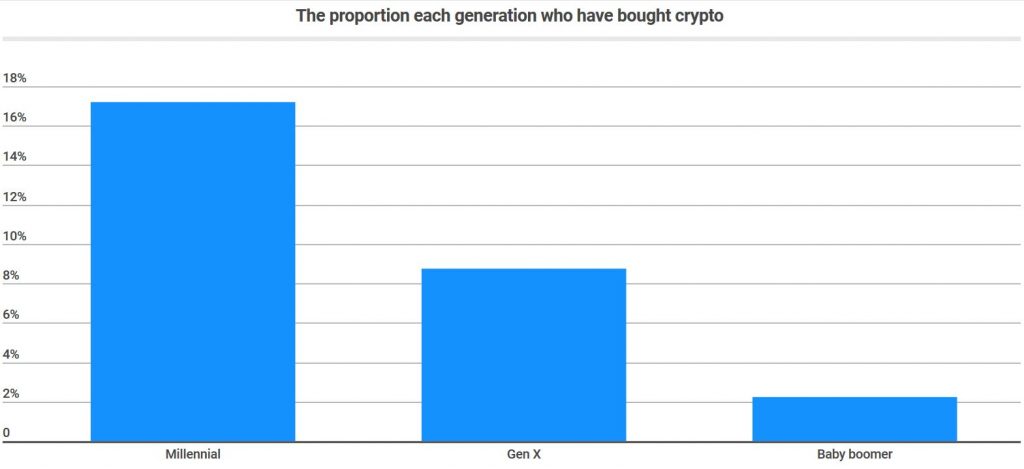
 The survey also found a major gender gap in cryptocurrency holding, with just 4.27% of women saying they own cryptocurrency compared with 11.86% of men. And the average amount of bitcoin purchased by women is just $1,821.65, compared with $3,923.16 for men. This gap appears likely to continue in the future as of those who don’t own cryptocurrency, 6.28% of women and 9.47% of men plan to purchase.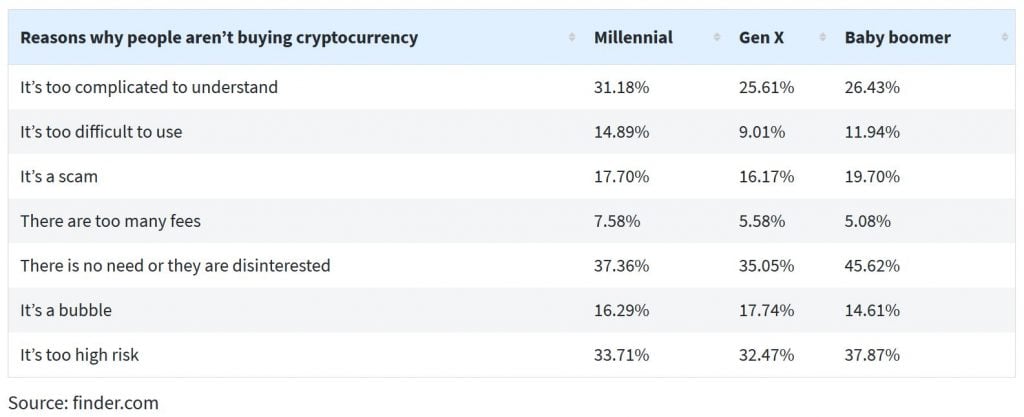
 U.S. President Donald Trump’s former chief strategist, Steve Bannon, has said in a speech on Tuesday that blockchain-based cryptocurrencies can help bring about liberation for Western nations from under the control of all powerful central banks such as the Federal Reserve and the
  The former executive chairman of the alt right platform Breitbart News, which served a pivotal role in the election of President Trump according to many American political observers, was speaking to a crowd of 1,500 right wing Europeans in Zurich, Switzerland on Tuesday. He has been touring Europe with his message of economic nationalism, seeking to empower new local populist parties in the region to achieve victory over the establishment as he has done in the latest US elections.

 According to