Showing posts with label Russia. Show all posts

Monday, March 4, 2019

Nordea Bank Faces Allegations of Laundering Russian Millions


Finnish public broadcaster YLE will air a damning program on March 4 that reveals Nordea Bank’s alleged involvement in a multi-million-dollar money laundering scheme. The program will show how dirty money, mostly from Russian criminals, passed through Nordea, the biggest lender in the Nordic region.

YLE to Broadcast ‘Big Information Leak’ on Money Laundering

Nordic financial authorities indicated in October that they had received documents from Bill Browder’s Hermitage Capital Management alleging Nordea had breached anti-money laundering laws.
YLE has now said on its website it will broadcast a program on Monday afternoon revealing how Nordea allegedly became a conduit of hundreds of millions of euros of mostly dirty Russian money. Nordea’s chief executive officer Casper von Koskull will also participate in another YLE program covering money laundering late Monday night.
Nordea Bank Faces Allegations of Laundering Russian Millions
Shares of Nordea tumbled 6.5 percent on the news, as fretful investors sold off their stake in banks thought to be connected to the scandal. According to a Bloomberg report, the bank has said it “is aware of the media story and has been in dialogue” with YLE and the Danish newspaper Berlingske, which also intends to publish the laundering report later on March 4. A spokesperson for Nordea told the agency:
We have not yet seen the program or article. Based on what we have been invited to comment on, these are all issues that we have seen and commented on before and are therefore in line with previous statements made on AML issues.

Europe’s Biggest Banks Hubs for Illicit Financial Flows

The latest report, which comes at a time when Nordea’s Nordic contemporaries such as Swedbank and Danske Bank have both faced allegations relating to a money-laundering scandal in Estonia, adds weight to the theory that banks are at the forefront of fueling illicit financial flows. Although various analysts have blamed cryptocurrencies for driving money-laundering, terrorism and other crimes, due to their semi-anonymous nature, research has shown that most financial institutions in developed countries are – in one way or another – involved in money-laundering.
News.Bitcoin.com reported last mont that Switzerland’s largest bank, UBS, was fined 3.7 billion euros ($4.2 billion) for money laundering, while Denmark’s largest bank was forced to terminate its operations in Estonia following the unearthing of a $226 billion scandal. In October, anti-money laundering experts Fortytwo Data released a survey which revealed that almost all of Europe’s biggest banks have been sanctioned for money laundering offences over the past decade.
The research firm established that at least 18 of the 20 biggest banks in Europe, including five UK institutions, were slapped with various multi-million dollar fines for violations relating to money laundering. All 10 of Europe’s biggest banks, including HSBC, Barclays, BNP Paribas, Société Générale and Santander have fallen foul of anti-money laundering authorities, while recent crises at the likes of ING, Danske Bank and Deutsche Bank “only reinforce this impression, demonstrating how no bank is immune to money laundering sanctions, no matter how large,” said Fortytwo Data.
Nordea Bank Faces Allegations of Laundering Russian Millions
report in the New York Times recently noted that French banking giant BNP Paribas in 2014 pleaded guilty and paid a $8.9 billion fine for processing billions of dollars’ worth of transactions for companies in countries under United States economic sanctions. Federal prosecutors said BNP Paribas had “banked on never being held to account for its criminal support of countries and entities engaged in acts of terrorism and other atrocities.”
Two years earlier, HSBC consented to a deferred prosecution settlement with the U.S. Justice Department and forfeited $1.3 billion for failing to maintain controls that would have prevented drug dealers from laundering hundreds of millions of dollars. Although cryptocurrencies, which can be used as money without the backing of any central bank, have had their share of scandals, the malfeasance they are embroiled in is minuscule compared to traditional banks.
What do you think about banks being involved in money laundering? Let us know in the comments section below.

Thursday, February 28, 2019

Putin's Order: Russia to Adopt Crypto Regulation by July


Russia’s President Vladimir Putin has instructed his country’s government to adopt federal laws relating to cryptocurrency by July this year. Russia has earlier broadened the definition of “digital financial assets” to include cryptocurrencies. Putin’s latest order resembles one he made regarding crypto regulation last year.

Putin’s New Order

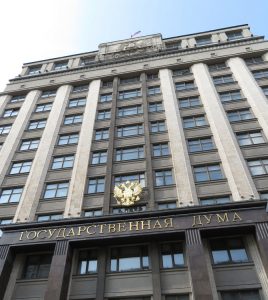
Putin has approved a list of instructions for 47 orders, according to a document posted on the Kremlin website on Wednesday. Among them is an order for the government to work with the State Duma, the lower house of parliament, to ensure adoption of “federal laws aimed at the development of the digital economy.” They include “determining the procedure for conducting civil law transactions in electronic form, as well as regulating digital financial assets and attracting financial resources using digital technologies,” the order details.
Putin's Order: Russia to Adopt Cryptocurrency Regulation by July This Year
The deadline listed on the order is July 1, 2019. Responsible officials are Russian Prime Minister Dmitry Anatolyevich Medvedev and State Duma Chairman Vyacheslav Viktorovich Volodin.
As news.Bitcoin.com previously reported, the original texts of the proposed regulation for cryptocurrencies have been extensively revised. While references to cryptocurrency, tokens, mining, and smart contracts in the bills have been removed, the legal definition of “digital financial assets” has been broadened to cover cryptocurrencies.

Multiple Delays

Putin’s latest order resembles one he made last year when he instructed the government to work with the central bank to “ensure that changes are made to the legislation of the Russian Federation” to determine the legal status of digital technologies including cryptocurrency, token, and smart contract. He put Medvedev and the central bank governor, Elvira Nabiullina, in charge of completing the task.
Putin's Order: Russia to Adopt Cryptocurrency Regulation by July This Year
In May last year, three bills aimed at regulating cryptocurrencies were filed in the State Duma and were scheduled for adoption in July, as ordered by Putin. However, Russian lawmakers could not agree on the appropriate legal framework after the first reading in the spring.
The State Duma plans to review the bills again in March, Rambler news outlet reported last week, noting that Oleg Nikolayev, a member of the State Duma Committee on Economic Policy, confirmed that the discussion is at the final stage of development.
Medvedev said in January that there is no reason to bury cryptocurrencies. “As with any social phenomenon, any economic institute, there are both bright sides and dark sides,” he described. Earlier this month, the Russian Minister of Justice voiced his belief that cryptocurrencies do not need to be legally defined yet.
What do you think of Putin’s order? Do you think Russia will start regulating the crypto industry by July this year? Let us know in the comments section below.

Monday, March 26, 2018

New Bill Aims to Allow Crypto Payments in Russia

A draft law aiming to protect the rights of owners of cryptocurrencies, while regulating their use for payments, has been introduced in Russia’s parliament. The bill defines terms like “digital money” and “digital rights”. It also allows authorities to subject cryptos to taxation, inheritance rights, and bankruptcy claims.

“Digital Money” to Be Legal Means of Payment

The law amends Russia’s Civil Code to create a basis for “legal relations in the digital economy”. The draft is co-sponsored by the Speaker of State Duma, Vyacheslav Volodin, and the head of the parliamentary Legislation Committee, Pavel Krasheninnikov. Their initiative effectively legalizes financial transactions in the digital environment.
New Bill Aims to Allow Crypto Payments in RussiaBill №424632-7 has been filed about a week after the introduction of bill №419059-7, prepared by the Finance Ministry. In its latest version, the law “On Digital Financial Assets” regulates initial coin offerings and crypto mining, but bans cryptocurrencies according to its critics. The fate of cryptos, like bitcoin, will be decided by the Central Bank of Russia (CBR), which has repeatedly opposed their circulation and exchange in the country.
In the new law, cryptocurrencies are referred to as “digital money”, Rossiyskay Gazeta reports. According its authors, it’s necessary to legally define cryptos and other “digital” terms to ensure that the legal rights of participants in virtual transactions are protected. The draft reads that their acceptance for payments, deposits, transfers and as units of account will not be obligatory in the Russian Federation. However, it also provides for the use of cryptocurrencies as means of payment when that’s technically possible and risks are excluded.
“In perspective, digital money will be used as a payment instrument, but only in cases and on terms established by the law,” said Pavel Krasheninnikov. Quantities will be controlled and users’ information will be collected. Lawmakers claim this will allow authorities to track cryptocurrencies in cases of bankruptcy and also apply inheritance rights.

Changes to Be Implemented By May

New Bill Aims to Allow Crypto Payments in RussiaThe legislation is expected to facilitate digital deals like smart contracts. Digital confirmations will be just as valid as written statements and signatures. The regulation of digital rights creates basis for a taxation mechanism in the virtual space. It also provides for applying measures to prevent the laundering of funds acquired through illegal means.
If adopted, the new digital economy law should enter into force by May 1, 2018. Supplementary regulations will determine different aspects of the digital rights and the circulation of cryptocurrencies. They will be developed with the participation of the Central Bank of Russia and the Ministries of Finance and Economic Development.
The legal status of cryptocurrencies has become the focal point of the regulatory debate in Moscow. Relevant institutions, like the Finance Ministry and the CBR, have sometimes expressed completely different opinions on the matter. Proposals are ranging from allowing free crypto trade to introducing an outright ban and even criminal liability for illegal circulation of money surrogates. If the latest bill wins support in parliament, cryptos may be accepted as means of payment in Russia after all.
Do you expect Russia to eventually legalize cryptocurrencies? Share your thoughts in the comments section below.  

Images courtesy of Shutterstock.
Source : bitcoin.com

Sunday, March 11, 2018

Bitmain Opens Repair Center in Russia

Leading manufacturer of crypto mining equipment Bitmain has opened a service center in Russia. Miners in the country will be able to repair their ASIC rigs locally, saving both time and money. Previously, they had to send faulty equipment back to China, dealing with customs formalities and paying costly shipping.  

Bitmain to Repair ASICs in Irkutsk

Bitmain, one of the largest cryptocurrency miners and a leading manufacturer of equipment for bitcoin mining, has decided to cater the needs of the growing Russian market locally. The Chinese company has recently opened a tech support center in the city of Irkutsk, one of the largest in Siberia. The new facility will repair Bitmain’s ASIC-rigs and even replace faulty equipment.
Bitmain Opens Repair Center in RussiaRussian mining companies will surely welcome the announcement, as up until now they were forced to send defective ASICs back to China. That involved going through some nerve-wracking customs formalities and paying for expensive shipping to Asia.
In the absence of a licensed repair shop, many Russian miners had to either fix the rigs themselves or rely on local “handicraftsmen”. Sending the precious “iron” to China was both expensive and risky, as the hardware could be damaged in shipping. Going back and forth through Russian and Chinese customs further complicated the servicing of mining devices by their manufacturer.
From now on, qualified repairs will be performed in the new Bitmain service center in Irkutsk. Unrepairable devices will be replaced with new ones, provided they are covered by warranty, as Hi-news.rureports. The postal address of the facility is: Index 664043, City of Irkutsk, 12 Rakitnaya Street, office 103.
Before sending the hardware, though, Russian miners have to contact tech support and fill out a form available on the website of the manufacturer. Devices can be shipped after Bitmain’s agents clarify all details, answer any outstanding questions, and approve the claim.
Customers should not forget to create a repair ticket. To do that, they need to set up an account, log in, and then go to Support – Create Repair Ticket. Bitmain recommends sending S9, T9, T9+ and R4 models fully assembled, if they are manufactured after October 2016. The company operates two other repair centers – in Hong Kong, for clients from all over the world, and in California, for US customers.

Mining Business Going Global

Bitmain is one of the most successful producers of mining equipment, largely thanks to its ASIC products, designed to provide the immense computing power needed to mine bitcoin. The Chinese company also controls some of the biggest mining facilities in the world. Recently published data suggests it has made between $3 and $4 billion last year from mining cryptocurrency and selling equipment to other miners, as news.Bitcoin.com reported.
Bitmain Opens Repair Center in RussiaChina has been the home base for the largest mining companies for years. New regulatory risks, including restrictions on electricity consumption, have forced major players to look around for other, more friendly destinations to relocate at least part of their business.
It has been reported that Bitmain is setting up regional headquarters in Singapore. The company has also established a branch in Switzerland. According to some publications, the Beijing-based firm is building a new data facility in the State of Washington. BTC Top, the third-biggest mining pool, is said to open a mining farm in Canada, and the next company on the list, Viabtc, is already operating facilities elsewhere in North America and in Iceland.
Do you expect more manufacturers of mining equipment to expand their operations globally? Tell us in the comments section below.

Images courtesy of Shutterstock. 
Source : bitcoin.com

Wednesday, March 7, 2018

Popular Social Networks in Russia to Accept Bitcoin

Two Russian-based social networking platforms have announced they are now accepting cryptocurrency payments. Vkontakte, the most popular social media among Russian-speaking users, and Odnoklassniki, which has many subscribers in former Soviet states, will take bitcoin from advertisers. They also intend to start paying developers and partners in cryptocurrency.

BTC and BCH Payments to Be Processed by Bitpay

Both Bitcoin (BTC) and Bitcoin Cash (BCH) will be accepted by a platform that the two social networks work with, Mytarget. Cryptocurrency transactions will go through the My.com subsidiary of Mail.ru Group and will be processed by the U.S. based payment service provider Bitpay. For now, developers of applications and associated platforms will continue to receive their payments in fiat currency, but plans are in place to offer them the crypto option in the near future.
Popular Social Networks in Russia to Accept BitcoinVkontakte (Incontact) is the most popular social media in the Russian Federation and among Russian speakers around the world. It currently ranks 18th in Alexa’s top 500 sites on the web. It is also among the most visited social networking sites in Belarus, Kazakhstan, Moldova, Estonia, Latvia and Ukraine (before it was banned by Kiev last year). The platform has more than 470 million accounts and reported ₽14 billion rubles of revenue in 2017 (~$250 million).
The social network was founded by Russian entrepreneur Pavel Durov back in 2006 and has since overtaken Odnoklassniki as Russia’s leading social media platform. Odnoklassniki (Classmates) is still popular in Russia and some other countries in the post-Soviet-space, like Uzbekistan and Kyrgyzstan. Durov, who was dismissed as CEO of Vkontakte in 2014, is also founder of the Telegram messaging service, which supports encrypted messages and encryption for voice calls.
“Advertising through the Mytarget platform and its network can be paid for in Bitcoin (BTC) or Bitcoin Cash (BCH). In the near future, owners of participating sites and applications will also be able to receive income in cryptocurrency”, Mail.ru Group announced. The Russian internet company, which owns Vkontakte and Odnoklassniki, also controls the email service Mail.ru, a smaller social network called Moi Mir, the open source GPS application Maps.me and the instant messaging client ICQ.

Convenience for Crypto Businesses

“Mail.ru Group expands the use of two popular cryptocurrencies: BTC and BCH. The company introduces a convenient settlement method for those who already conduct business in cryptocurrency,” the group said in a press release, quoted by Russian media. According to its First Deputy Director Dmitriy Sergeev, crypto payments will provide its partners with maximum opportunities to develop their businesses.
Popular Social Networks in Russia to Accept BitcoinThe introduction of bitcoin payments by Mail.ru Group is an important move for the Russian crypto sector. The company, which reaches about 85% of internet users in the country, controls Qiwi, a Russian payment service provider with 17.2 million wallets. Qiwi’s representatives participate in a working group preparing proposals to fine-tune the draft law “On Digital Financial Assets” presented by the Finance Ministry.
During the latest meeting of the group at the Ministry of Economic Development, proposals were made to introduce tax breaks on profits and incomes from crypto-related transactions. These and other ideas will be discussed by the Council of Ministers of Russia, which will attempt to resolve differences between relevant institutions. Russia’s government is expected to review and incorporate the new legislation amendments put forward by other authorities, businesses and representatives of the crypto community.
Do you expect other large Russian companies to introduce cryptocurrency payments in their dealings with clients and partners? Tell us in the comments section below.

Images courtesy of Shutterstock. 
Source : news.bitcoin.com
#bitcoinsocialnetwork

Tuesday, March 6, 2018

Russia Drafts Law to Criminalize the Use of Cryptocurrencies as Money

The Russian Ministry of Finance is drafting a law to criminalize the use of cryptocurrencies as money substitutes. The Bank of Russia and the finance ministry have previously opposed the use of cryptocurrency in this way, citing that only rubles can be used for payments of goods and services in Russia.

Money Surrogate Bill

The Russian Ministry of Finance proposed last week to “criminalize the turnover of money surrogates,” including cryptocurrencies, Interfax reported. Deputy Finance Minister Alexei Moiseev revealed during Vnesheconombank‘s conference that his ministry has “prepared a draft law on criminal liability for the turnover of money surrogates,” Business FM elaborated, adding:
The ministry assumes serious responsibility, right up to criminal ones, for arranging schemes, issuing money substitutes and receiving them…This concerns the payments in cryptocurrency.
Russia Drafts Law to Criminalize the Use of Cryptocurrencies as MoneyMoiseev further clarified that “the text of the bill on monetary surrogates is not exclusively devoted to cryptocurrencies,” noting that only the Russian ruble can be used to pay for goods and services, as declared in the Russian constitution. While “Monetary surrogates are prohibited,” the publication explained that the laws have not specified penalties for violations. “The consequences of the violation of this principle have not been reflected anywhere for many years. The Finance Ministry decided to fill this gap” the news outlet detailed.

Prohibiting the Use of Crypto as Money

Although there have been many positive developments for cryptocurrencies among Russian lawmakers this year, the Ministry of Finance and the Bank of Russia have never wavered from their stance on cryptocurrencies as money surrogates. The head of the central bank, Elvira Nabiullina, has repeatedly said that the regulator is against “cryptocurrency as private money and money surrogates,” Interfax described, adding that “under the definition of money surrogates there are also cryptocurrencies.” Moiseev expressed last week:
There is the ruble, and everything else is a surrogate.
Russia Drafts Law to Criminalize the Use of Cryptocurrencies as Money
Alexei Moiseev.
The finance ministry has also recently proposed “to legislatively prohibit the use of cryptocurrency as a surrogate for payments in the territory of Russia,” the news outlet wrote.
According to Moiseev, many Russian companies that accept bitcoin use services that instantly convert cryptocurrencies into rubles. Citing that these companies receive only rubles, he confirmed that “Such operations will not be closed.”
The finance ministry recently submitted the bill on digital financial assets, amid its disagreement with the central bank on “the exchange of cryptocurrency for rubles and other assets.” The Ministry of Finance was quoted emphasizing that it “must finalize the draft law, which will define the concept of ‘money surrogates’ in the legislation and establish responsibility for their use as a means of payment,” concluding that:
This is necessary to protect the ruble as the single legal [means of] payment in Russia.
What do you think of this draft law? Let us know in the comments section below.

Images courtesy of Shutterstock.
Source : news.bitcoin.com

Thursday, March 1, 2018

Court Will Not Seize Crypto as Debt Payment from Bankrupt Citizen in Russia

The Moscow bankruptcy court has ruled that cryptocurrencies of a bankrupt debtor will not be seized to pay his creditors. The trustee for the case has failed to convince the judge to include the debtor’s cryptocurrencies in the bankruptcy estate.

Court Rejects Crypto in Bankruptcy Estate

The Moscow Arbitration Court ruled this week that cryptocurrency cannot be used to pay creditors in the bankruptcy case of Russian citizen Ilya Tsarkov, who filed bankruptcy in October of last year.
Court Will Not Seize Crypto as Debt Payment from Bankrupt Citizen in RussiaInterfax reported from the courtroom that the appointed trustee for the case, Aleksey Leonov, proposed “to collect [Tsarkov’s] digital savings as a debt payment.” He claimed that cryptocurrency “is definitely an asset that can be sold,” adding that it will not contradict the country’s current legislation, the news outlet detailed, as translated by Crime Russia.
While Leonov “insisted on the inclusion of digital currency in the bankruptcy assets,” the publication elaborated that “the court noted that the laws of the Russian Federation do not recognize cryptocurrency as property.” The court therefore “refused to include cryptocurrency discovered on the accounts of insolvent Ilya Tsarkov in the bankruptcy assets,” the news outlet wrote, adding:
The court did not agree with the Leonov’s position. As they indicated in the decision, the concept of cryptocurrency is not set out in the current legislation, which does not allow to recognize digital money as property and, thus, include it in the bankruptcy assets.

Crypto Not Recognized by Russian Law

Tsarkov reportedly voluntarily disclosed having a crypto wallet with Blockchain.info, but opposed the seizure of his cryptocurrencies, citing that “Russian legislation does not consider cryptocurrency assets as property, [so] it is impossible to foreclose on them,” Interfax noted. Earlier this month, the court ordered him to disclose his cryptocurrency holdings, following the request by Leonov.
Court Will Not Seize Crypto as Debt Payment from Bankrupt Citizen in RussiaTsarkov’s representative at the court also stressed that cryptocurrency is not part of the Russian Civil Code. “The legal regime of the cryptocurrency is not given in any legal act, the cryptocurrency is information that can not be included in the bankruptcy mass,” he was quoted by Interfax.
Kommersant recently reported that the Russian Ministry of Economic Development and the Federal Financial Monitoring Service (Rosfinmonitoring) both believe that:
The lack of a statutory financial status of digital financial assets does not yet allow them to be used in bankruptcy proceedings.
What do you think of the court’s decision? Let us know in the comments section below.
Images courtesy of Shutterstock.
Source : news.bitcoin.com

Court Strikes Down Ban on 40 Bitcoin Sites in Russia

Saint Petersburg City Court has struck down a ban on 40 bitcoinrelated websites offering information about cryptocurrencies and exchange services in Russia. The ban was imposed by a district court in May last year, following a request from the Prosecutor’s Office. It prohibited the “spreading of information” about bitcoin, as well as buying and selling cryptos.

Site Owners Win Important Battle

Court Strikes Down Ban on 40 Bitcoin Sites in RussiaIn what seems to be a small, but important victory for the Russian crypto community, the City Court of Saint Petersburg has struck down a ban that affected more than 40 websites related to bitcoin. It was imposed by a district court in May 2017, after a request from the Prosecutor’s Office in the Northern Capital of Russia. The measure effectively restricted access to the internet platforms and prevented the exchange services offered by some of them.
Following last year’s ban, the owners of the websites appealed the local judicial authorities’ decision in the second-largest Russian city. The Oktyabrsky District Court had stated that the spreading of information about bitcoin and the use of cryptocurrencies was illegal in the Russian Federation. Its decision was forwarded to the Russian telecommunications supervisory agency Roscomnadzor, which was supposed to blacklist the sites.

The Case to Be Reviewed by Other Judges

“The actual existence of a cryptocurrency outside the legal frame does not provide for the implementation of legal mechanisms to ensure that the parties fulfil their obligations”, decreed the first instance ruling. The regional court also noted that bitcoin was “not backed by real value” and its use was anonymous. It stated that the Russian ruble was the only official currency in the country, pointing out that emitting other currencies and money surrogates was prohibited.
According to the judges, the cryptocurrency “does not have a subject which guarantees its conditional purchasing power”. They were worried that “the emission and the circulation of bitcoins is completely decentralized” and there was no state regulation. The court warned that cryptocurrencies, like bitcoin, contributed to the growth of the shadow economy and could not be used by citizens and legal entities in the Russian Federation.
Now, the case will be returned to the Oktyabrsky District Court. According to Russian law, it should be reviewed again by a new judicial panel.

Moscow Still Working on Crypto Legislation

Court Strikes Down Ban on 40 Bitcoin Sites in RussiaAuthorities in the Russian capital are still preparing new legislation to regulate the cryptocurrency sector. A law on “digital financial assets” and crowdfunding has been proposed by the Ministry of Finance, despite disagreements with the Central Bank of Russia over the circulation and trading of cryptocurrencies. Many other drafts touching different aspects of the digital economy are also pending in the State Duma. There have been multiple calls to regulate cryptocurrencies in the Russian Federation. Recently, the head of the parliamentary Committee for Economic Policy Sergey Zhigarev proposed legalizing cryptocurrencies in order to attract foreign investments, as news.Bitcoin.com reported.
Federal institutions have been criticized over their slow progress. Interested parties and regional officials have called on the Russian government to catch up with other countries. The chairman of the Financial Market Committee in the Duma Anatoliy Aksakov said its members were trying to speed up the legal process and were ready to introduce the drafted legislation in the lower house of Russia’s parliament. Experts from the crypto sector have said that proposed regulations leave many issues unresolved and need revision before their final adoption.
Do you think that the decision to lift the ban on bitcoin-related websites represents an important change in the attitude of Russian authorities toward cryptocurrencies? Share your thoughts in the comments section below.

Images courtesy of Shutterstock. 
Source : news.bitcoin.com