Vilnius-based Coingate, cryptocurrency payment gateway for European merchants, is teaming with Paris-based Prestashop, an open source ecommerce solution. The combination means more choices for cryptocurrency enthusiasts and might encourage an increase in adoption.
Coingate + Prestashop = 80,000 More Merchants
Dmitrijus Borisenka, Coingate CEO, explained, “Encouraging adoption among people beyond the tech-savvy early-adopters is one of the biggest priorities for us. Prestashop has an ideal base of small to medium stores that may well utilise cryptocurrencies not only as an innovative and increasingly popular payment method, which is much cheaper than traditional card payments, but also the promotional benefits that the Bitcoin tag carries.”
Partnership between the two companies is expected to reach as many as 80,000 European merchants. The idea is to weave Coingate into Prestashop’s backend, providing users with a near frictionless experience.
“There is an entire new market of people who own all kinds of cryptocurrencies and are looking for ways to spend them,” Mr. Borisenka continued, “but the gap between customers and merchants in this sphere is still huge. It is therefore crucial to educate and encourage businesses to adopt a forward-thinking attitude and to overcome the prevailing misconceptions that surround cryptocurrencies.”

Settlements Limiting Volatility
After setting up an account with Coingate, the team promise merchants a payment module capable of installation in “a few clicks.” They’re set to support bitcoin cash, bitcoin core, and nearly 50 other cryptocurrencies. For merchants, it’s a single payment solution casting a wide crypto net. An added feature is in settlement: payments come in a single currency of the merchant’s choice.
Elaborating, Mr. Borisenka assured, “It is absolutely safe to accept cryptocurrencies as a way of payment. We protect our merchants from exchange rate volatility risk by locking the price of Bitcoin at the moment of the purchase. Merchants who opt to receive Euro payouts from us, essentially, do not have to touch cryptocurrencies at all – we handle every stage of the process.”
Settlements are made in Euros real-time the next day, which speaks to the volatility issue. Both companies are experienced in payment and cryptocurrency sectors. Coingate has 1,500 accounts around the globe, 50,000 users, and monthly revenue around €10 million. Prestashop has been around since 2007, and has evolved into an open source platform with more than a quarter million online stores in nearly two hundred countries.
Do you think merchant acceptance is key to crypto adoption? Let us know in the comments!
Images via Pixabay, Coingate.
Source : bitcoin.com


 Ukraine’s parliament, however, has not made any significant progress towards adopting the necessary legal framework.
  The Autorité des Marchés Financiers (AMF) issued a warning on Thursday regarding cryptocurrency platforms that have been blacklisted by the agency. The AMF is France’s stock market regulator, an independent public body responsible for safeguarding investments in financial instruments and other savings as well as maintaining orderly financial markets.
 Along with the warning, the agency published a list of 15 cryptocurrency companies, which, it says, are “unauthorized companies proposing atypical investments without being authorized to do so.” Examples of such investments are “Diamonds, rare earths, wine or ‘crypto assets,’” the AMF wrote, adding that it has been providing a list of unauthorized diamond investments platforms since July of last year. In December, it decided to add “other miscellaneous assets” to this list, which includes “companies proposing to invest in ‘crypto assets’, some of which are presented as cryptocurrencies.”
 The regulator says that the 15 companies it has listed “keep advertising and/or marketing to the French public” despite “the warning of the AMF regarding this new regulation.”
 Mr. Hoekstra’s
  Many of the regulatory failures of other nations, Mr. Hoekstra asserts, stem from an inability to develop an adaptive policy approach that is “tailored” to the particularities of cryptocurrency. The finance minister states that developing “an effective […] and proportional” regulatory approach to “trade in bitcoin and other cryptocurrency is complex,” adding that “Many countries are struggling with this, because the current supervisory framework and instruments are insufficiently tailored to cryptocurrency.”
 Mr. Hoekstra advocates that regulators focus on developing “a coordinated international approach.” The minister states that he has identified “growing support and urgency” for a transnational approach, giving praise “The European Commission, Germany and France” for commencing international “discussion on the design of regulation.” Mr. Hoekstra also announced the “Netherlands[’] support” for the expected discussions between financial leaders on the subject of cryptocurrency regulation at the upcoming G20 summit.
 The finance minister also states that Holland “wants to play a pioneering role within the European and international approach [to] cryptocurrency.” Mr. Hoekstra states that he will “discuss possibilities for further regulatory steps” with “like-minded [EU] member states.”
 Belgium’s Financial Services and Markets Authority (FSMA) has recently warned about fraudulent cryptocurrency trading platforms. The agency also published a list of 19 crypto platforms it “has received questions or complaints from consumers about and has established indications of fraud,” the agency wrote.
 FSMA noted that several new platforms have emerged online, using the same methods to lure investors. “They claim to offer the best (or one of the best) trading platform(s) on which, both beginners and professionals” can trust and trade on instantly, the financial watchdog detailed.
 In its warning, FSMA urged investors to be cautious and “remain vigilant for all indications of investment fraud.” The agency recommends for investors to “Always verify the identity of the company (identity details, country of residence, etc.),” as well as to “Never trust a company if it cannot be clearly identified.”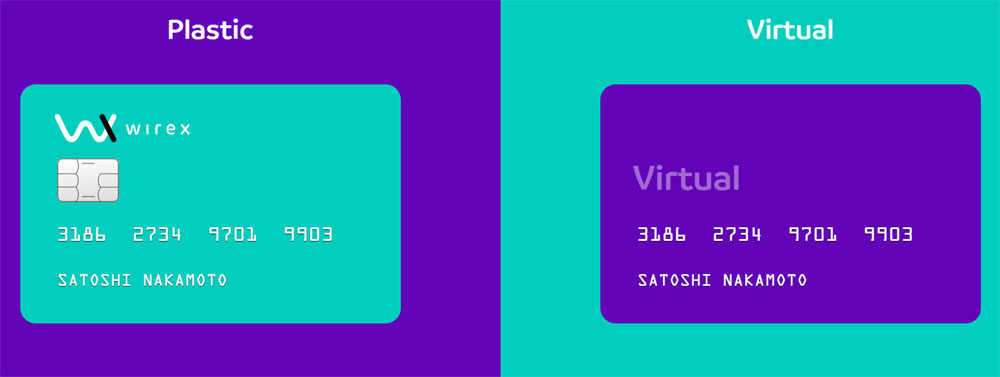
 “Shopping, purchasing goods on the Internet, and withdrawing funds at an ATM have becoming much easier”, said cofounder and CEO Pavel Matveev, quoted by Russia media. He confirmed the integration of cryptocurrency wallet accounts with contactless Visa debit cards.
