Showing posts with label Regulation. Show all posts

Tuesday, March 5, 2019

Indian Supreme Court Advocate Says Cryptocurrencies Cannot Be Regulated


A supreme court advocate has explained the limitations of the Indian government’s power to regulate cryptocurrency, determining that the court should not get involved. Meanwhile, the crypto community awaits the government’s regulatory framework and the supreme court hearing of the petitions against the banking ban by the central bank.

Cryptocurrencies Cannot Be Regulated

Lawyer Abraham C. Mathews describes himself as “a supreme court advocate and a chartered accountant” who practices “in the supreme court as well as the high court and some of the tribunals in Delhi.” He authored an article published in Money Control on Monday voicing his opinion on cryptocurrencies and the Indian government’s efforts to regulate them. According to him:
Cryptocurrencies by their very nature cannot be regulated … The supreme court should resist the urge to get involved.
Indian Supreme Court Advocate Says Cryptocurrencies Cannot Be Regulated
“There is simply no denying the fact that cryptocurrencies have not gained the widespread usage their early proponents predicted, with usage as currency still restricted to a few pockets of enthusiasts,” he wrote. While praising blockchain technology, believing that it “has taken off,” he claims that “the revolution called cryptocurrency has all but failed.”
The advocate explained his position by stating that crypto regulation simply cannot be enforced due to the “alarmingly low” probability “of the coins being recovered or the perpetrators being discovered” when an exchange is hacked. He emphasized that “Nothing that the government introduces or requires can change this fact.”
He proceeded to talk about how the Reserve Bank of India (RBI) “has so far … barred banks from transacting with entities that deal with cryptocurrencies,” elaborating:
This is, unfortunately as far as the central bank can go. You cannot regulate … something that you do not have some semblance of control over.
He further asserted: “This is not to say that cryptocurrencies must be declared illegal. It must be treated for what it is: a shiny new toy. Let them play with it. However, giving it statutory or regulatory legitimacy is not just imprudent, it is foolhardy.”

Community Wants Positive Regulation

Meanwhile, industry participants are calling for positive crypto regulation. A social media campaign initiated by the CEO of crypto exchange Wazirx, Nischal Shetty, has entered its 124th day. “Every day there are 100s of retweets and likes and thousands of views,” he previously told news.Bitcoin.com.
In February, a number of Indian policymakers gathered at a blockchain summit. Among topics of discussion was crypto regulation. At the conclusion of the event, participants agreed that “The regulation is planned to be implemented by end of financial tenure,” according to the post-event announcement.
Indian Supreme Court Advocate Says Cryptocurrencies Cannot Be Regulated
A number of proposals for the country’s regulatory framework for cryptocurrencies have been submitted to the government. In January, the Ministry of Finance invited reputed law firm Nishith Desai Associates to present their proposals. Last month, the Indian National Association of Software and Services Companies (Nasscom) published a report that calls for crypto regulatory certainty.
Last week, the supreme court gave the government four weeks to come up with the crypto regulation. The government told the court at the time that its committee tasked with drafting the regulation is in final stages of deliberations.
What do you think of Mathews’ view on crypto and regulation? Let us know in the comments section below.

Saturday, March 2, 2019

Indian Government Confirms Cryptocurrency Regulation in Final Stages


The government of India has told the country’s supreme court that the committee tasked with drafting crypto regulation is in the final stages of deliberations. The court plans to hear the petitions against the banking ban by the central bank after the government produces crypto regulation.

Crypto Regulation in Final Stages

The Indian supreme court briefly heard the crypto case on Monday. Lawyer Jaideep Reddy of Nishith Desai Associates was at the court representing the Internet and Mobile Association of India (IAMAI) in its writ petition against the crypto banking ban by the central bank, the Reserve Bank of India (RBI). He told news.Bitcoin.com on Friday that “The matter was heard for a very short period of time,” elaborating:
The matter started with the counsel for the Union of India stating that its committee is in the final stages of deliberations and that the matter should be heard after that.
Indian Government Confirms Cryptocurrency Regulation in Final Stages
After hearing the government’s counsel, “The court reacted by saying that 4 weeks’ time would be given and stated to the said counsel that this was the last chance that time would be given for the same,” Reddy detailed.
The court order from Monday’s hearing states that “Upon hearing the counsel the court made the following order … Four weeks time is granted, as a last opportunity, to the Union of India to do the needful.” The crypto case will be listed for hearing after four weeks.

Fighting the RBI Ban

Responding to the court’s decision, “the petitioner exchanges’ counsel responded that the matter concerns the challenge to the RBI circular, which is an altogether separate issue from the committee report, and that as the court said last time, the validity of the RBI circular should be heard and decided independently,” Reddy explained to news.Bitcoin.com. He added:
The counsel also mentioned that with each passing day, employee livelihoods are being lost.
Nonetheless, he said “the court deemed it fit to hear the matter only after 4 weeks.” India’s central bank issued a circular in April last year banning banks from providing services to crypto businesses. The ban went into effect in July and all local crypto exchanges subsequently stopped allowing customers to withdraw fiat through bank accounts.
Indian Government Confirms Cryptocurrency Regulation in Final Stages
Zebpay, one of the largest crypto exchanges in the country, shut down its Indian exchange activities altogether due to the banking restriction. Some crypto exchanges have found creative solutions to combat the banking problem such as by launching exchange-escrowed peer-to-peer services which they claim to have grown much in popularity.
Do you think the Indian government will come up with positive regulation for cryptocurrency? Do you think the supreme court will lift the RBI ban? Let us know in the comments section below.

Thursday, February 28, 2019

35 Countries Urged to Regulate Cryptocurrency Exchanges Like Commercial Banks


The Financial Action Task Force has finalized its requirements for the supervision and monitoring of cryptocurrency service providers. The inter-governmental body has reportedly urged all of its 35 member countries to regulate crypto exchanges in the same manner they regulate commercial banks.

Regulating Like Commercial Banks

Supervision standards for cryptocurrency exchanges were discussed at a Financial Action Task Force (FATF) meeting which took place in France on Feb. 22. Business Korea reported South Korea’s top financial regulator, the Financial Services Commission, describing on Tuesday after attending the meeting that the FATF will tighten the supervision standards on cryptocurrency exchanges. The publication elaborated:
The FATF urged the financial authorities of the member states to regulate cryptocurrency exchanges in the same manner they regulate commercial banks.
The task force asserted that these measures are necessary “in order to prevent cryptocurrencies from being misused for illegal transactions,” the news outlet conveyed.
35 Countries Urged to Regulate Cryptocurrency Exchanges Like Commercial Banks
An inter-governmental body established in 1989, the FATF sets standards and promotes effective implementation of legal, regulatory and operational measures for combating money laundering, terrorist financing and other related threats to the integrity of the international financial system. There are currently 35 member countries, plus Hong Kong, the European Commission and the Gulf Cooperation Council.
The member countries are Argentina, Australia, Austria, Belgium, Brazil, Canada, China, Denmark, Finland, France, Germany, Greece, Iceland, India, Ireland, Israel, Italy, Japan, Republic of Korea, Luxembourg, Malaysia, Mexico, Netherlands, New Zealand, Norway, Portugal, Russian Federation, Singapore, South Africa, Spain, Sweden, Switzerland, Turkey, the U.K., and the U.S.

Requirements for Member Countries

The FATF announced at the meeting that it had finalized “detailed implementation requirements for effective regulation and supervision / monitoring of virtual asset services providers.” The measures will be formally adopted as part of the FATF standards in June. The Financial Action Task Force explained:
For the purposes of applying the FATF recommendations, countries should consider virtual assets as ‘property,’ ‘proceeds,’ ‘funds,’ ‘funds or other assets,’ or other ‘corresponding value.’
35 Countries Urged to Regulate Cryptocurrency Exchanges Like Commercial Banks
Furthermore, “Countries should apply the relevant measures under the FATF recommendations to virtual assets and virtual asset service providers,” the task force detailed, emphasizing that the member countries should require these providers to “identify, assess, and take effective action to mitigate their money laundering and terrorist financing risks.” In addition, these providers “should be required to be licensed or registered.”
However, the FATF clarified that “A country need not impose a separate licensing or registration system with respect to natural or legal persons already licensed or registered as financial institutions” that are permitted to provide crypto asset services and are already subject to obligations under its recommendations.
What do you think of the FATF’s crypto regulatory guideline for its member countries? Let us know in the comments section below.

Putin's Order: Russia to Adopt Crypto Regulation by July


Russia’s President Vladimir Putin has instructed his country’s government to adopt federal laws relating to cryptocurrency by July this year. Russia has earlier broadened the definition of “digital financial assets” to include cryptocurrencies. Putin’s latest order resembles one he made regarding crypto regulation last year.

Putin’s New Order

Putin has approved a list of instructions for 47 orders, according to a document posted on the Kremlin website on Wednesday. Among them is an order for the government to work with the State Duma, the lower house of parliament, to ensure adoption of “federal laws aimed at the development of the digital economy.” They include “determining the procedure for conducting civil law transactions in electronic form, as well as regulating digital financial assets and attracting financial resources using digital technologies,” the order details.
Putin's Order: Russia to Adopt Cryptocurrency Regulation by July This Year
The deadline listed on the order is July 1, 2019. Responsible officials are Russian Prime Minister Dmitry Anatolyevich Medvedev and State Duma Chairman Vyacheslav Viktorovich Volodin.
As news.Bitcoin.com previously reported, the original texts of the proposed regulation for cryptocurrencies have been extensively revised. While references to cryptocurrency, tokens, mining, and smart contracts in the bills have been removed, the legal definition of “digital financial assets” has been broadened to cover cryptocurrencies.

Multiple Delays

Putin’s latest order resembles one he made last year when he instructed the government to work with the central bank to “ensure that changes are made to the legislation of the Russian Federation” to determine the legal status of digital technologies including cryptocurrency, token, and smart contract. He put Medvedev and the central bank governor, Elvira Nabiullina, in charge of completing the task.
Putin's Order: Russia to Adopt Cryptocurrency Regulation by July This Year
In May last year, three bills aimed at regulating cryptocurrencies were filed in the State Duma and were scheduled for adoption in July, as ordered by Putin. However, Russian lawmakers could not agree on the appropriate legal framework after the first reading in the spring.
The State Duma plans to review the bills again in March, Rambler news outlet reported last week, noting that Oleg Nikolayev, a member of the State Duma Committee on Economic Policy, confirmed that the discussion is at the final stage of development.
Medvedev said in January that there is no reason to bury cryptocurrencies. “As with any social phenomenon, any economic institute, there are both bright sides and dark sides,” he described. Earlier this month, the Russian Minister of Justice voiced his belief that cryptocurrencies do not need to be legally defined yet.
What do you think of Putin’s order? Do you think Russia will start regulating the crypto industry by July this year? Let us know in the comments section below.

Sunday, April 15, 2018

16 Government-Approved Crypto Exchanges Have Formed Self-Regulatory Group in Japan

A new association has been registered in Japan consisting of 16 government-approved cryptocurrency exchanges. The group will focus on establishing self-regulatory rules and will have the authority to investigate and sanction members that do not comply with self-regulation.

New Japanese Crypto Association

A new cryptocurrency organization has been registered with the Japanese Financial Services Agency (FSA), consisting of 16 crypto exchanges that have been approved by the agency, according to local media.
16 Government-Approved Crypto Exchanges Have Formed Self-Regulatory Group in JapanThe Japan Virtual Currency Exchange Association recently held a general meeting, during which a director was chosen, Jiji Press reported.
The group plans to “elect Taizen Okuyama, President of Money Partners as Chairman” at the next Board of Directors meeting which will be held on April 23. The association will be formally launched on that date.
The news outlet quoted the new group explaining that they aim to establish rules for their member exchanges, and as an organization, will have the “authority to investigate and banish member companies.”

Founding Members

The Japan Virtual Currency Exchange Association’s founding members are the 16 fully licensed exchanges operating in Japan. They are Bitflyer, Money Partners, Bitbank, Bitpoint, Quoine, SBI Virtual Currencies, Fisco Virtual Currency, Btcbox, Zaif, GMO Coin, Bittrade, Tokyo Bitcoin Exchange (DMM Bitcoin), Bitarg Exchange Tokyo, FTT Corporation, Xtheta Corporation, and Bitocean.
16 Government-Approved Crypto Exchanges Have Formed Self-Regulatory Group in JapanJapan already has two existing associations in the crypto space: the Japan Blockchain Association (JBA) and the Japan Cryptocurrency Business Association (JCBA). The former is headed by Bitflyer CEO Yuzo Kano and the latter by the president of Money Partners Group.
The new association will be a member of both the JBA and the JCBA, both of which will continue to operate, according to the news outlet. Some crypto exchanges are members of both associations, such as GMO Coin and Coincheck.
While all members of the new association are FSA-approved exchanges, members of the JBA and the JCBA also include “deemed dealers,” which are exchanges the agency allows to operate while their registrations are under review. Coincheck, which was hacked in January, falls into this category.
The FSA is currently strengthening its rules for deemed dealers. Masashi Nakajima, Professor at Reitaku University, who participates in the agency’s research group, pointed out that most users did not know that Coincheck was unlicensed, Sankeibiz conveyed. “I ask for a mechanism that is easy to recognize at a glance” to indicate that an exchange is still unlicensed such as a posting on the exchange’s website, he was quoted.
Do you think this new association will help the crypto ecosystem in Japan? Let us know in the comments section below.

Images courtesy of Shutterstock.

Wednesday, March 28, 2018

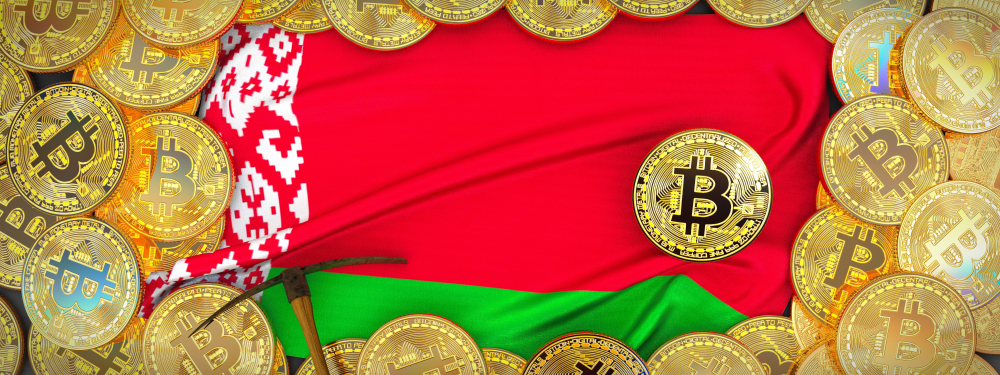
Crypto Business Is Now Legal in Belarus

Crypto-related activities are now considered legal in Belarus. The presidential decree “On the Development of the Digital Economy” came into force on March 28. The country aims to become a global IT hub luring entrepreneurs from around the world with a business-friendly environment. Unprecedented freedoms and generous incentives are enticing crypto companies to invest in the former Soviet republic.

Crypto Activities Are Free, Tax-Free

Belarus, a country that suffers from a bad reputation with politicians in the West, is now set to improve its image with western businessmen. On Wednesday, the close ally of Moscow, also called the last dictatorship in Europe, became a European leader as far as crypto freedoms are concerned. Comprehensive regulations, largely legalizing the crypto sector, are now officially in place.
Crypto Business Is Now Legal in Belarus
Belarus High-Tech Park
Decree №8, signed by President Alexander Lukashenko in December, entered into force on March 28 to create conditions for the development of the digital economy in Belarus. It effectively legalizes crypto business activities, like exchange services, initial coin offerings, mining operations, smart contracts. The document does not restrict the issuing, storage, and trade of digital tokens. Individual entrepreneurs and corporate entities from the crypto industry are free to do business anywhere, as long as they register as residents of the Belarus High Technologies Park (HTP).
Lukashenko’s decree introduces tax breaks and other incentives for crypto businesses until January 1, 2023. No taxes will be imposed on companies that profit from mining, issuing and placement of digital coins. The same applies to crypto-related income of private individuals from mining and trading cryptocurrencies. In the next five years, even crypto firms based abroad will not be taxed.
The new regulations include measures to simplify procedures regarding foreign trade and the hiring of foreign nationals by the residents of the Hi-Teck Park. Employees and investors in the HTP will not be required to apply for work permits. They will also benefit from a special visa waiver regime and will be granted temporary residence status in Belarus.

Comprehensive Regulations Adopted

An array of legal changes accompany the Decree “On the Development of the Digital Economy”. This week Belarus implemented a new standard aimed at adjusting its accounting practices to address cryptocurrencies. It classifies “digital tokens” as cryptos in the new provisions, according to their acquisition and intended use. Authorities have defined the information crypto companies and entrepreneurs are required to share. The National Chart of Accounts has been amended.
Crypto Business Is Now Legal in Belarus
The National Bank of Belarus
The central bank of Belarus has also implemented changes. They concern the oversight of commercial banks and other financial institutions and introduce new requirements for the internal control procedures. According to the government press service, the new rules aim to prevent the legalization of illicit incomes, terrorism financing and the proliferation of weapons of mass destruction. Officials claim the regulations are intended to perfect anti-money laundering measures and improve cybersecurity.
Taking into account all challenges, Minsk has decided to create a special Council for the Development of the Digital Economy. It is tasked with coordinating the digitization and the development of the information and communication sectors. The council is chaired by Prime Minister Andrei Kobyakov. Furthermore, President Lukashenko spoke about the creation of a Ministry of the Digital Economy, and voiced his support for the idea. The new department may be set up as early as this year.

Belarus to Make the Most of It

Crypto Business Is Now Legal in Belarus
Alexander Lukashenko
Alexander Lukashenko has stated many times that his country needs to learn how to benefit from the development of the information and communication technologies. In December, the Belarusian leader said the country’s IT industry needs a new impulse. “Belarus should become attractive for talented people and successful companies,” he insisted, quoted by RIA Novosti.Belarus has what it takes to develop artificial intelligence, big data and blockchain technologies, he added.
Lukashenko said he had no intentions to slow down the progress but warned entrepreneurs they should not forget the state and its interests. “Let’s work together for this piece of land. I will guarantee you stability and non-interference,” he promised.
Belarusian authorities have registered unprecedented interest from crypto businesses since the signing of Decree №8. The government in Minsk announced that the number of new registrations with the High-Tech Park increased by about a quarter in 2018. Residents of the High-Tech Park now work in 67 markets around the world.
While the new regulations create favorable conditions for foreign investments and technological development, critics point out that Belarus may become just another offshore zone, a crypto-friendly one. The question when ordinary Belarusians will be able to receive their salaries in bitcoin and pay their bills with cryptocurrency, remains unanswered, for now at least.
Do you think other countries in Europe will follow Belarus and adopt their own comprehensive regulations for the crypto industry? Share your expectations in the comments section below.   

Images courtesy of Shutterstock.
Source : bitcoin.com

Tuesday, March 27, 2018

Crypto Regulator CFTC Chairman Takes Funding Cuts “Incredibly Personally"

The United States’ Commodity Futures Trading Commission (CFTC) has received a $1 million USD budget cut. The announcement has come following the CFTC Chairman, Christopher Giancarlo requested an increase in the regulator’s budget of 12 percent.

CFTC Request For Funding Increase Answered With Budget Cut

Crypto Regulator CFTC Chairman Takes Funding Cuts “Incredibly Personally”It has been reported that the Commodity Futures Trading Commission has received a $1 million dollar cut to its approximately $250 million budget. The agency appears to have taken significant offense to the funding cut – as the CFTC had originally requested a 12 percent increase to its funding, in which it hoped to secure $281.5 million in financial resources.
Congress’ decision to roll-back the regulator’s funding has been taken as a great offense by the institution. Erica Elliott Richardson, a spokeswoman for the agency, stated that the institution’s chairman, Christopher Giancarlo, “takes this budget decrease incredibly personally, and is currently meeting with our finance team to figure out a path forward for the agency.”
“We are absolutely astounded by the decrease in the CFTC’s budget,” Mrs. Richardson added.

SEC Funding Bolstered in Spite of CFTC Cuts

CFTC Request For Funding Increase Answered With Budget CutIn the recent months, the Commodity Futures Trading Commission has increasingly sought position itself as a major regulatory force with the United States’ emerging cryptocurrency industry. The respective chairmen from the CFTC and the Securities and Exchange Commission (SEC), testified to a Senate Banking Committee regarding their perceptions of the risks and challenges posed by cryptocurrencies last month.
Despite the reduction of the CFTC’s funding, the United States Congress has granted the SEC a budget of $1.7 billion – roughly 3% more than was requested by the agency.
Brett Redfearn, the head of the SEC’s trading and markets division, recently advocated for an extension of the legislative apparatus surrounding the stock market – describing the crypto markets as currently exhibiting qualities of the “Wild West.” Mr. Redfearn stated, “I’m not sure all of the rules would translate over, but there are certainly principles that exist in that space that we have to then apply in some respect to what’s happening with crypto-asset trading.”
What is your response to the CFTC’s funding cut? Share your thoughts in the comments section below!

Images courtesy of Shutterstock
Source : bitcoin.com

Monday, March 26, 2018

New Bill Aims to Allow Crypto Payments in Russia

A draft law aiming to protect the rights of owners of cryptocurrencies, while regulating their use for payments, has been introduced in Russia’s parliament. The bill defines terms like “digital money” and “digital rights”. It also allows authorities to subject cryptos to taxation, inheritance rights, and bankruptcy claims.

“Digital Money” to Be Legal Means of Payment

The law amends Russia’s Civil Code to create a basis for “legal relations in the digital economy”. The draft is co-sponsored by the Speaker of State Duma, Vyacheslav Volodin, and the head of the parliamentary Legislation Committee, Pavel Krasheninnikov. Their initiative effectively legalizes financial transactions in the digital environment.
New Bill Aims to Allow Crypto Payments in RussiaBill №424632-7 has been filed about a week after the introduction of bill №419059-7, prepared by the Finance Ministry. In its latest version, the law “On Digital Financial Assets” regulates initial coin offerings and crypto mining, but bans cryptocurrencies according to its critics. The fate of cryptos, like bitcoin, will be decided by the Central Bank of Russia (CBR), which has repeatedly opposed their circulation and exchange in the country.
In the new law, cryptocurrencies are referred to as “digital money”, Rossiyskay Gazeta reports. According its authors, it’s necessary to legally define cryptos and other “digital” terms to ensure that the legal rights of participants in virtual transactions are protected. The draft reads that their acceptance for payments, deposits, transfers and as units of account will not be obligatory in the Russian Federation. However, it also provides for the use of cryptocurrencies as means of payment when that’s technically possible and risks are excluded.
“In perspective, digital money will be used as a payment instrument, but only in cases and on terms established by the law,” said Pavel Krasheninnikov. Quantities will be controlled and users’ information will be collected. Lawmakers claim this will allow authorities to track cryptocurrencies in cases of bankruptcy and also apply inheritance rights.

Changes to Be Implemented By May

New Bill Aims to Allow Crypto Payments in RussiaThe legislation is expected to facilitate digital deals like smart contracts. Digital confirmations will be just as valid as written statements and signatures. The regulation of digital rights creates basis for a taxation mechanism in the virtual space. It also provides for applying measures to prevent the laundering of funds acquired through illegal means.
If adopted, the new digital economy law should enter into force by May 1, 2018. Supplementary regulations will determine different aspects of the digital rights and the circulation of cryptocurrencies. They will be developed with the participation of the Central Bank of Russia and the Ministries of Finance and Economic Development.
The legal status of cryptocurrencies has become the focal point of the regulatory debate in Moscow. Relevant institutions, like the Finance Ministry and the CBR, have sometimes expressed completely different opinions on the matter. Proposals are ranging from allowing free crypto trade to introducing an outright ban and even criminal liability for illegal circulation of money surrogates. If the latest bill wins support in parliament, cryptos may be accepted as means of payment in Russia after all.
Do you expect Russia to eventually legalize cryptocurrencies? Share your thoughts in the comments section below.  

Images courtesy of Shutterstock.
Source : bitcoin.com

Belarus Adopts Crypto Accounting Standard

Days before legalizing crypto activities, Belarus has adopted a new accounting standard that deals with cryptocurrencies. It classifies digital tokens according to their acquisition and intended use. The document defines the information companies will be required to share with authorities. The presidential decree regulating the crypto sector comes into force on March 28.

Goods, Investments, Settlements

The Ministry of Finance in Minsk has developed a new standard that specifies the procedures for keeping accounting records of crypto transactions. The document does not explicitly mention cryptocurrencies, which are not regarded as legal tender in Belarus. Nevertheless, it effectively regulates the reporting of cryptocurrency flows.
Belarus Adopts Crypto Accounting StandardThe obligations of organizations conducting token sales and the exact approaches to assessing the cost of “digital tokens” are also defined in the Ministry’s decree. The rules apply to private entities and not the state-owned banks or government institutions, the department clarified in an announcement quoted by Belta news agency.
The new standard classifies cryptos according to their acquisition and their intended use. Tokens acquired through initial coin offerings (ICOs) are referred to as investments. They should be debited as either “Long-term financial investments”, if their circulation period exceeds 12 months, or as “Short-term financial investments”. Their amounts must be credited in the accounting balance under “Settlements with different debtors and creditors” and “Other income and expenses”.
If the tokens are purchased for subsequent sale, by a trader or an exchange, they have to be reported in the “Goods” debit account and under the following credit accounts: “Settlements with suppliers and contractors” and “Income and expenses for current activities”. Digital tokens acquired as a result of mining operations or as remuneration for verification of crypto transactions are to be recorded under the “Finished goods” debit account and also as “Main activities” in the credit section of the balance.

Other Regulations Changed

Amendments have been made to several other standards of the National Chart of Accounts. These concern the individual accounting statements and the consolidated financial statements. The Finance Ministry has determined the data companies working with tokens are required to disclose in their accounting records. The information should include the amount and type of tokens in possession, as well as their initial value as calculated at the end of the previous year.
Belarus Adopts Crypto Accounting Standard
Decree №8 “On the development of the digital economy” was signedby President Alexander Lukashenko in December. It legalizes crypto activities, creating conditions for exchange services, initial coin offerings, and cryptocurrency mining operations. The document introduces tax breaks and other incentives for crypto businesses until 2023. It will come into force on March 28, 2018.
With its implementation, Belarus is set to become arguably the first jurisdiction with a comprehensive legal framework regulating the blockchain industry. The decree does not imply restrictions or any special requirements for issuing, placement, storage, and exchange of digital tokens.
Individual entrepreneurs and corporate entities will be free to do crypto business in the country provided they register as residents of the Belarus High Technology Park (HTP). At the same time, the use of cryptocurrencies is expected to remain somewhat limited, as they will not be accepted as legal means of payment.
Do you think that the legal status of cryptocurrencies in Belarus will change in the future? Share your expectations in the comments section below.  

Images courtesy of Shutterstock.
Source : bitcoin.com