Showing posts with label Mining. Show all posts

Saturday, March 24, 2018

Slush Pool Mines the First ASIC Boost Block Sparking More Debate

On March 24, the mining operation Slush Pool announced it had mined a block using the controversial ASIC Boost protocol and did so using a Halong Miner. The news follows the pool revealing it was compatible with ASIC Boost which sparked up a heated debate just recently.

Slush Pool Mines Block 514882 Using ASIC Boost Technology and a Halong Miner

Slush Pool Mines the First ASIC Boost Block Sparking More Debate According to a recent announcement over Twitter form the mining operation Slush Pool they have mined a block using ASIC Boost technology. Further, the pool had stated they mined block 514882 using Halong Mining equipment. Halong Mining is also a contentious subject as a lot of skeptics believe the mining company and its devices are fabricated. However, Slush Pool says they got about “16 TH/s” of hashrate using the equipment created by the tendentious company.   
“Our block 514882 is the first-ever block mined using the active version-rolling aka overt ASIC Boost,” explains Slush Pool.
According to the available evidence, it was mined by Halong Mining hardware. Congrats to the lucky miner from Guangdong, China.
Slush Pool Mines the First ASIC Boost Block Sparking More Debate
Halong Miner. Currently, most of the public is skeptical of this company because machines are not widely available for public review. Some believe Dragon Mint machines are a fabrication. Slush Pool, however, states that block 514882 was mined with a Halong mining device. The mining pool’s leaders denied having any affiliation with Halong when the company first announced launching. 

Core Supporter’s Bitmain Hate Continues

After the announcement, the news went viral on social media platforms like Twitter and Reddit forums. Of course, bitcoin core supporters were pleased to hear the news and most seemed to forget about how controversial this technology was just a few months ago. Most of the proponents of core stated that they didn’t appreciate Bitmain using ASIC Boost because they may have been mining with it covertly. Ironically enough being covert no one can prove that anyone had used the protocol back then and it has never been proven that Bitmain used the technology. In many respects, core supporters were thrilled to see another operation be competitive towards Bitmain.  
“Great to see competition in this space — Anything that hits Bitmain is a good news,” explains one core proponent.
However, one person confused by the comment writes:  
Not sure what you mean — One of the reasons the anti-Bitmain sentiment grew so large was because of AsicBoost itself — Are you happy that there’s competition in the ASIC Boost space? Or just the mining space, even though the competitor is also implementing ASIC Boost?
Slush Pool Mines the First ASIC Boost Block Sparking More Debate
Even though it was never proven that Bitmain used ASIC Boost covertly, many core supporters still believe Bitmain is their enemy.

The Community Now Waits to See if This Technology Affects the Mining Space

On the other side of the hand, bitcoin cash (BCH) supporters thought the excitement from core proponents was extremely contradictory from when most of them called ASIC Boost and “attack or an exploit.” A lot of hateful words and malice was directed at Bitmain during the time even a core supporter from Israel vandalized the Bitmain officeslocated in the region. One bitcoin cash supporter writes after Slush’s announcement, “ASIC Boost is good but not Jihan ASIC Boost.” Still, the argument is combated by the ‘covert’ part of the discussion, where many core supporters believe the technology is evil when used secretly. Moreover, fans of Slush using ASIC Boost also stated that covert ASIC Boost was incompatible with Segregated Witness (Segwit) which created another topical scaling discussion at the time. But again BCH proponents were very skeptical of the announcement and think the current actions are hypocritical.
No one quite knows exactly what the use of ASIC Boost will bring to the global arena of mining competition. ASIC Boost is a method of optimization that makes mining operations more efficient by 20-30 percent according to estimates.
What do you think about Slush mining the first ASIC Boost block on BTC mainnet? Do you think the action is hypocritical or do you think its ok to use the technology non-secretively? Let us know your thoughts on this subject in the comments below.

Images via Shutterstock, Pixabay, Bitmain, Halong Mining, and Slush Pool logos.
Source : bitcoin.com

Sunday, March 18, 2018

Monero Miners In Uproar After Panic Algorithm Change Due to ASICs Coming Online

Bitmain has found itself in a war with words with the monero community over the release of its latest cryptocurrency miner, the Cryptonight-capable X3. The unit is being offered at a discounted rate to existing customers, but critics claim this is because the miners will soon be ineffective at mining monero, the main coin to use the X3’s Cryptonight technology. Monero lead developer Riccardo Spagni has emphasized that the units will not work on monero due to a scheduled hard fork designed specifically to outwit the Cryptonight algorithm.

Monero’s Crypto Nightmare

“We are pleased to announce the all-new Antminer X3, to mine cryptocurrencies based on the Cryptonight hashing algorithm,” tweeted Bitmain cheerily on March 15. The new units would start shipping instantly, limited to one per customer to prevent hoarding. The price would even be dropped to $3,000 for existing customers, according to an email. Posters on monero’s reddit board have urged buyers not to purchase the units due to the scheduled change to the coin’s Proof of Work algorithm. Others have gone so far as to accuse Bitmain of mining with the machines for months, and only shipping them now that monero’s algorithm is due to change, rendering them useless.

Battle of the Algorithms: How Bitmain Sparked an ASIC Mining War
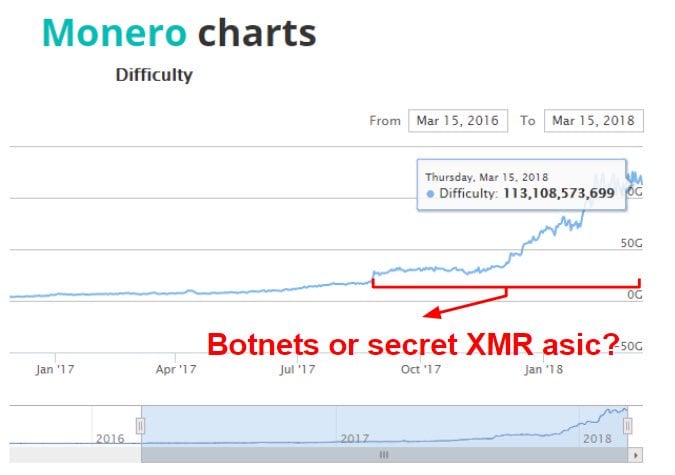
Cryptonight, the chipset fitted to Bitmain’s X3s, has turned into a crypto nightmare for anyone who’s been trying – and failing – to subsist off monero mining this year. As one keen-eyed observer spotted, after Bitmain took possession of the chips, monero’s hashrate rocketed. The monero team, led by Riccardo Spagni, who’s referred to Bitmain as “a known bad actor”, struggled to work out what had happened. A monero mining botnet that had infected millions of computers was one possibility floated, but this was discounted.
To combat the sudden increase in hashrate, Monero announced a PoW change on February 11 to make the privacy coin less susceptible to the Cryptonight algorithm. While not mentioning Bitmain by name, the post noted how “Mining, in general, is also prone to the rich-get-richer effect, which ultimately leads to centralization,” and continued:
We will perform an emergency hard fork to curb any potential threat from ASICs if needed. Furthermore, in order to maintain its goal of decentralization and to provide a deterrent for ASIC development and to protect against unknown or undetectable ASIC development, the Monero team proposes modifying the Cryptonight PoW hash every scheduled fork, twice a year…Finally, we will continue to research alternative Proof of Work functions that may provide better ASIC resistance than Cryptonight.
As a result of the hard fork, the Bitmain X3s will be largely worthless, at least for the purposes of mining monero. All that will be left for recipients of the new X3s is such alts as Bytecoin, Digitalnote, and Darknetcoin: shitcoins to all intents and purposes that cannot be easily offloaded onto the market to offset mining costs.
Battle of the Algorithms: How Bitmain Sparked an ASIC Mining War
Anyone who orders one of Bitmain’s new units will find themselves engaged in a race against time. As one person complained: “Not informing their users that their machine will be useless to mine the biggest and most popular by far crytponight coin is misleading and that is being polite.” By the time they take delivery of their new Antminer, more Cryptonight coins may have hard forked, in which case buyers could wind up lumped with the world’s most expensive doorstop.
Do you think Bitmain has acted unethically, or is it just doing business? Let us know in the comments section below.

Images courtesy of Shutterstock, Bitmain, and Francis Pouliot.
Source : bitcoin.com

Crypto Miners to Turn Off Rigs during Earth Hour

Crypto miners have been invited to join this year’s Earth Hour campaign by turning off some of their hardware between 8:30 and 9:30 pm on March 24. The initiative to take part in the WWF’s annual event comes from the Russian crypto community. The “Crypto Hour” organizers hope to focus attention on the need for eco-friendly blockchain technologies.   

The Crypto Hour

The “Crypto Hour” will take place within the World Wildlife Fund annual event known as the Earth Hour. The WWF campaign encourages people and businesses to turn off electric lights for one hour each year, usually in the last days of March. This year miners from Russia and around the world have been invited by Russian mining and blockchain experts to do the same – switch their equipment off at exactly 8:30 pm on March 24.
By joining the initiative, crypto miners will demonstrate their social responsibility and commitment to caring for the planet, the organizers told Rambler. They hope “Crypto Hour” will make them think about how to greenify the blockchain technologies they work with.
According to some estimates, the bitcoin network consumes up to 50 terawatt-hours of electricity a year, and the rate is increasing. On top of that, mining cryptocurrencies releases a lot of heat. Cooling the powerful specialized hardware requires more energy.
Crypto Miners to Turn Off Rigs during Earth Hour
The organizers of the “Crypto Hour” will urge authorities to create an “eco mining map” showing locations where mining farms can be built close to renewable energy sources. They will insist on taking measures to stimulate the flow of investments in eco-friendly mining projects in the Russian Federation.
“We are calling for the development of systems that utilize the heat generated from mining, and the implementation of less energy-intensive distributed ledger technologies”, said Petr Dvoryankin, founder of Cryptolife, an international network of digital assets investors. Dvoryankin, who is one of the organizers of “Crypto Hour”, is a member of the expert council in the Duma working on the legal framework for the country’s fintech sector.
With cheap electricity and cold climate, Russia offers good opportunities to conduct profitable crypto mining operations. The country’s power generating facilities can produce 40% more electricity than what the local market needs. Improving energy efficiency, in both households and companies, remains a major challenge for Russia’s economic development.

The Earth Hour

This year’s Earth Hour is between 8:30 and 9:30 pm local time, on March 24. The event started in Australia in 2007. Now it’s held annually in more than 7,000 cities around the world. It symbolizes the commitment of individuals, communities, businesses and organizations to the planet and its future.
Crypto Miners to Turn Off Rigs during Earth HourThe motto of Earth Hour 2018 in Russia is “Vote for Nature”. The campaign is raising awareness about conservation issues like the protection of natural reserves, the development of alternative energy sources, the introduction of separate collection of waste and its recycling. Participants are invited to vote for the most important environmental initiative.
The 2018 event is expected to be the biggest to date. According to preliminary estimates, 30 million Russians will take part in the campaign this year.
Do you think that many crypto miners will join the “Crypto Hour” initiative? Share your expectations in the comments section below.

Images courtesy of Shutterstock.
Source : bitcoin.com

Tuesday, March 13, 2018

South Carolina Declares Cloud Mining Contracts to Be Securities

The Attorney General of South Carolina has served a cease and desist order on Genesis Mining. In documents filed before its Securities Commissioner, it has declared cloud mining contracts to be securities, in a move that could have repercussions beyond the confines of the Palmetto State.

Attorney General Forecasts Dark Clouds for Mining Contracts

Cloud mining contracts enable individuals to purchase hashing power without the need to get their hands dirty. Rather than have to order, install, and maintain a bunch of miners, capacity can be purchased from a datacenter that’s set up to mine crypto. Genesis Mining is one of the most well established operators in the space. It, as well as companies such as Hashflare, has been plying its trade for years. Now, a cease and desist order looks set to put paid to that, in the state of South Carolina at least.
South Carolina Declares Cloud Mining Contracts to Be Securities“Join over 1,000,000 people with the world’s leading hashpower provider,” proclaims the Genesis website. “It’s super simple – Your mining rigs are already set up and running. As soon as you’ve set-up your account you can start to earn your first coins from our bitcoin cloud mining service!” The company operates a datacenter in Reykjavik, Iceland. But in a filing dated March 9, South Carolina Attorney General’s Office has ordered Genesis Mining and Swiss Gold Global to stop targeting residents in the state.

The Company That Lives in the Cloud

Like many web companies, Genesis is everywhere and nowhere. The administrative proceeding document directed to the Securities Commissioner of South Carolina lists Genesis’ last known address as Chinachem Century Tower in Hong Kong. This seems to be a common registration address for businesses and appears in the Offshore Leaks Database that publishes findings from the Panama Papers. Under a section headed Findings of Fact, the Attorney General’s filing states:
Genesis Mining offers mining contracts for six cryptocurrencies: Bitcoin, Dash, Ethereum, Litecoin, Monero, and Zcash, each of which entitles an investor to…a “Mining Contract”…in exchange for investing in a Mining Contract, Respondent Genesis Mining engages in a certain amount of computational effort on behalf of the investors.

Genesis Ordered to Shut up Shop

South Carolina Declares Cloud Mining Contracts to Be SecuritiesThe reason why the state’s Attorney General is filing the cease and desist then becomes apparent: “Genesis Mining continuously offered investment opportunities in Mining Contracts to South Carolina residents through its website.” It appears that Swiss Gold Global was selling the contracts on behalf of Genesis, but was not registered as a broker in South Carolina. This is illegal, the filing claims, because “investment contracts constitute securities, and an investment contract includes an investment in a common enterprise with the expectation of profits”.

U.S. residents are tiring of hearing that every crypto offering they touch constitutes a security. From ICO tokens to mining contracts, it seems that most investments have the potential to be interpreted as a security given that they’re purchased with the expectation of future profit. The Attorney General seems to have a prima facie case here, however, and Genesis Mining – should it contest the claim – may have its work cut out. It’s likelier that Genesis will focus its efforts elsewhere, for the loss of one U.S. state is inconsequential. But if other states were to follow suit, it could signal the beginning of the end for cloud mining contracts in the U.S.
For mining companies seeking to avoid having to register with the SEC – which is likely to be most of them – the smartest approach may be to avoid U.S. investors altogether. Moonlite, a project raising capital to construct mining datacenters in Iceland, is already taking that stance; U.S. investors are unable to participate in its token sale. Mining firms seeking investment, be it through cloud contracts or tokenization, may find their safest option is to omit U.S. states altogether.
Do you think mining contracts could reasonably be interpreted as securities? Let us know in the comments section below.

Images courtesy of Shutterstock, and Genesis Mining.
Source : bitcoin.com

Large Mining Farm Discovered in Abandoned Russian Factory

A large illegal facility for mining bitcoin was discovered by police in the Russian city of Orenburg. The farm has been set up on the premises of an abandoned factory. The masterminds of the crypto project have stolen electricity worth 60 million rubles. They risk years of imprisonment.   

One of Russia’s Biggest

Investigating unusual consumption of electricity, police in the Russian city of Orenburg came across one of the largest facilities for cryptocurrency mining in the country. The unknown miners have illegally set up their farm in a closed-down plant, plugging the cables into the nearby transformer station.
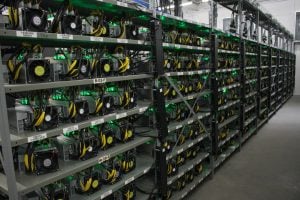
In what Russian media described as “a scene from The Matrix”, investigators found racks upon racks of mining processors. The farm was equipped with powerful application specific circuits, and not the ordinary video cards, used by amateur miners.
The ASIC devices have been most likely used to mine bitcoin, as they are able to provide the necessary computing power to process its transactions. ASICs consume enormous amount of electricity and generate a lot of heat. The cooling needed was provided by large industrial ventilators.
The farm was discovered after employees of the local utility company detected suspiciously high electricity consumption from the old factory. The state-owned enterprise went out of business years ago.
According to preliminary estimates, the energy hungry mining equipment has used electricity worth 60 million rubles (more than $1 million), Ren TV reports. The miners never bothered to pay any bills, however. If found by the police, they may be sentenced to 10 years in prison.

Mining on Industrial Scale

Cryptocurrency mining has been gaining popularity in Russia thanks to low electricity rates. Despite calls from officials to take mining out of garages and apartments, many Russians have tried to make a coin or two, using homemade GPU rigs. A string of fires due to faulty hardware has been covered in Russian media, with the latest incident caused by a pensioner in Vologda.
Large Mining Farm Discovered in Abandoned Russian FactoryRecent reports suggest, however, that amateur mining is not really that profitable anymore. Several Russian regions have declared their readiness to host industrial-scale mining facilities. Authorities in Leningrad Oblast have invited miners to a nuclear power plant that will be decommissioned within a couple of years. The local Economic Department and the company operating the NPP have already approved the project.
The Russian Federation is ready to accommodate entrepreneurs willing to invest in cryptocurrency mining. Homes and businesses consume less than 60% of the electricity the country can produce. Recently, a Russian businessman acquired two electric power stations to be used specifically for bitcoin mining. Foreign investors are welcome, as well.
The bitcoin farm in Orenburg, however, has not received approval from any government institution. The crypto facility in the old rubber processing plant is definitely not what authorities mean by industrialized mining. Nevertheless, the illegal farm is one of the biggest mining operations in Russia to date.
Do you think the Russian Federation will develop cryptocurrency mining on industrial scale? Tell us in the comments section below.

Images courtesy of Shutterstock, video Mereke Ulmanov (YouTube).
Source : bitcoin.com

Monday, March 12, 2018

Nasdaq-Listed Marathon Begins Bitcoin Mining Operations, Stock Up 32%

Traditional stock investors have just gotten another avenue for indirect exposure to the bitcoin market. A Nasdaq exchange listed former patent management company, Marathon, has changed its focus to ASIC mining and today started producing bitcoin.

Marathon Mining

Nasdaq-Listed Marathon Begins Bitcoin Mining Operations, Stock Up 32%
Marathon Patent Group bitcoin mining facility in Quebec
Marathon Patent Group, Inc. (Nasdaq:MARA), today announced that it has commenced bitcoin mining at a new facility in Quebec, Canada. Investors seems to greatly approve of this development as the stock is up 32% as of the time of writing a couple of hours after market open.
Marathon revealed that it had purchased 1,400 Antminer S9 miners from Bitmain and had leased 26,700 square feet of data center space in Quebec. The operations are expected to utilize approximately 2.0 MW and deliver approximately 19 Ph/s of ASIC mining capacity. The company is seeking to add up to an additional 3.9 MW of power. If completed, this is expected to provide capacity for up to 2,800 additional Antminer S-9s that if acquired, could be located at the same facility.
Marathon also explains to investors that while the Antminer S9s are presently mining bitcoin (BTC), they are able to switch to other digital assets/cryptocurrency using the SHA256 algorithm (such as bitcoin cash BCH) if needed.

From Patent Mining to Bitcoin Mining

Nasdaq-Listed Marathon Begins Bitcoin Mining Operations, Stock Up 32%
Marathon Patent Group bitcoin mining facility in Quebec
Marathon was previously an patent licensing and commercialization company which acquired and managed intellectual property rights from a variety of sources, including large and small corporations, universities and other patent owners. Now the company is said to be focused on mining digital assets with specialized computer equipment and plans to expand its activities to mine new digital assets.
Merrick Okamoto, Marathon’s Interim Chief Executive Officer and Chairman of the Board of Directors, stated, “Today’s announcement represents a milestone for the Company. I’d like to thank everyone that worked so hard to make this day a reality for our shareholders.”
The province of Quebec, Canada has become a magnet for bitcoin miners from all over the world thanks to cheap hydroelectric power and cold climate.
Are we expected to see many more public companies enter the bitcoin mining market? Share your thoughts in the comments section below!

Images courtesy of Shutterstock.
Source : bitcoin.com

Sunday, March 11, 2018

Bitmain Opens Repair Center in Russia

Leading manufacturer of crypto mining equipment Bitmain has opened a service center in Russia. Miners in the country will be able to repair their ASIC rigs locally, saving both time and money. Previously, they had to send faulty equipment back to China, dealing with customs formalities and paying costly shipping.  

Bitmain to Repair ASICs in Irkutsk

Bitmain, one of the largest cryptocurrency miners and a leading manufacturer of equipment for bitcoin mining, has decided to cater the needs of the growing Russian market locally. The Chinese company has recently opened a tech support center in the city of Irkutsk, one of the largest in Siberia. The new facility will repair Bitmain’s ASIC-rigs and even replace faulty equipment.
Bitmain Opens Repair Center in RussiaRussian mining companies will surely welcome the announcement, as up until now they were forced to send defective ASICs back to China. That involved going through some nerve-wracking customs formalities and paying for expensive shipping to Asia.

In the absence of a licensed repair shop, many Russian miners had to either fix the rigs themselves or rely on local “handicraftsmen”. Sending the precious “iron” to China was both expensive and risky, as the hardware could be damaged in shipping. Going back and forth through Russian and Chinese customs further complicated the servicing of mining devices by their manufacturer.
From now on, qualified repairs will be performed in the new Bitmain service center in Irkutsk. Unrepairable devices will be replaced with new ones, provided they are covered by warranty, as Hi-news.rureports. The postal address of the facility is: Index 664043, City of Irkutsk, 12 Rakitnaya Street, office 103.
Before sending the hardware, though, Russian miners have to contact tech support and fill out a form available on the website of the manufacturer. Devices can be shipped after Bitmain’s agents clarify all details, answer any outstanding questions, and approve the claim.
Customers should not forget to create a repair ticket. To do that, they need to set up an account, log in, and then go to Support – Create Repair Ticket. Bitmain recommends sending S9, T9, T9+ and R4 models fully assembled, if they are manufactured after October 2016. The company operates two other repair centers – in Hong Kong, for clients from all over the world, and in California, for US customers.

Mining Business Going Global

Bitmain is one of the most successful producers of mining equipment, largely thanks to its ASIC products, designed to provide the immense computing power needed to mine bitcoin. The Chinese company also controls some of the biggest mining facilities in the world. Recently published data suggests it has made between $3 and $4 billion last year from mining cryptocurrency and selling equipment to other miners, as news.Bitcoin.com reported.
Bitmain Opens Repair Center in RussiaChina has been the home base for the largest mining companies for years. New regulatory risks, including restrictions on electricity consumption, have forced major players to look around for other, more friendly destinations to relocate at least part of their business.

It has been reported that Bitmain is setting up regional headquarters in Singapore. The company has also established a branch in Switzerland. According to some publications, the Beijing-based firm is building a new data facility in the State of Washington. BTC Top, the third-biggest mining pool, is said to open a mining farm in Canada, and the next company on the list, Viabtc, is already operating facilities elsewhere in North America and in Iceland.
Do you expect more manufacturers of mining equipment to expand their operations globally? Tell us in the comments section below.

Images courtesy of Shutterstock. 
Source : bitcoin.com

Friday, March 9, 2018

Ant Creek: Is Bitmain Quietly Developing a Mining Facility in the US?

According to public documents the mining giant based out of Beijing, Bitmain Technologies, is allegedly building a data facility near Port Walla Walla, Washington called ‘Ant Creek.’

Is Bitmain Quietly Constructing a Large Mining Facility in Washington State?

Ant Creek: Is Bitmain Quietly Developing a Mining Facility in the US?The mining company and device manufacturer Bitmain has been quietly developing some sort of data facility based near the Port Walla Walla in Washington state. According to registration documents online, Ant Creek LLC is a firm based in Tumwater, Washington, and the active company was logged as an LLC on June 28, 2017. The for-profit Washington company’s record ownership is filed under Jihan Wu’s name.
Washington state in the U.S. has seen a surge of interest over the past few months due to cheaper electricity rates. News.Bitcoin.com recently reported on a small town called Wenatchee which is three hours from Seattle that’s becoming a mining epicenter. Allegedly the small town is home to a dozen miners, and over 75 have inquired with the head of the local power utility, Steve Wright. Chelan County in Washington is considering hosting mining operations in that area as well.

Ant Creek: Is Bitmain Quietly Developing a Mining Facility in the US?      Ant Creek to Provide Millions in Private Revenue and Full Time Jobs

As far as Bitmain’s Ant Creek is concerned the Port of Walla Walla’s Executive Director, Patrick Reay tells the regional publication the Union Bulletin that he has been working with Ant Creek for roughly six months. Reay explains the development is a “blockchain facility.” The town of Port Walla Walla is considering the lease of 40 acres of land between two industrial parks. According to the local news the Port’s bureaucrats the “bitcoin mining” project could produce $7-10 million in private revenue and 15-20 full-time jobs.
“Our purpose is to generate assessed value and create jobs,” Reay explains in an interview.
The Port’s Director details that the lease will be roughly $4,166 USD per month and a $535 state leasehold tax. Further Ant Creek will help develop certain property requirements like storm drainage, and water lines in line with the Walla Walla County building statutes. Bitmain Technologies is also strategically setting up facilities in Canada and Switzerland this year.
What do you think about Bitmain starting an operation in the state of Washington? Let us know in the comments below.   

Images via Shutterstock, Bitmain Technologies logo, and Pixabay. 
Source : news.bitcoin.com